
April 7, Jiuzhou Town (舊州鎮)
We planned to leave Cangzhou tomorrow. Today we had to make good use of our time and go to Jiuzhou Town (舊州鎮) to see the famous Iron Lion (鐵獅子). It can be called the cultural symbol of Cangzhou martial arts. In 2011, the city government built Shicheng Park (獅城公園) not far from Cangzhou West Station as a tourist attraction. In the park there is a replica Iron Lion for visitors to admire. Its metal surface has been finished with undulations and textures, and its size is even a little taller and larger than the original. The facilities in the park are both neat and beautiful. But for friends who love history and culture, I still recommend going to Jiuzhou. From Cangzhou West Station to Jiuzhou is actually not very far—only about thirty-some kilometers. I have learned that Jiuzhou was first established in the fifth year of Emperor Gaozu of the Western Han (202 BCE). It was originally named Fuyang (浮陽), renamed Qingchi (清池) in the Tang dynasty, and called Hongzhou City (洪州城) in the Song dynasty—the place where Lin Chong in Water Margin was sent into exile. It remained the administrative seat of Cangzhou until the second year of the Yongle era of the Ming dynasty (1404), when the administrative center moved to present-day Cangzhou City, and Hongzhou was renamed Jiuzhou (舊州).
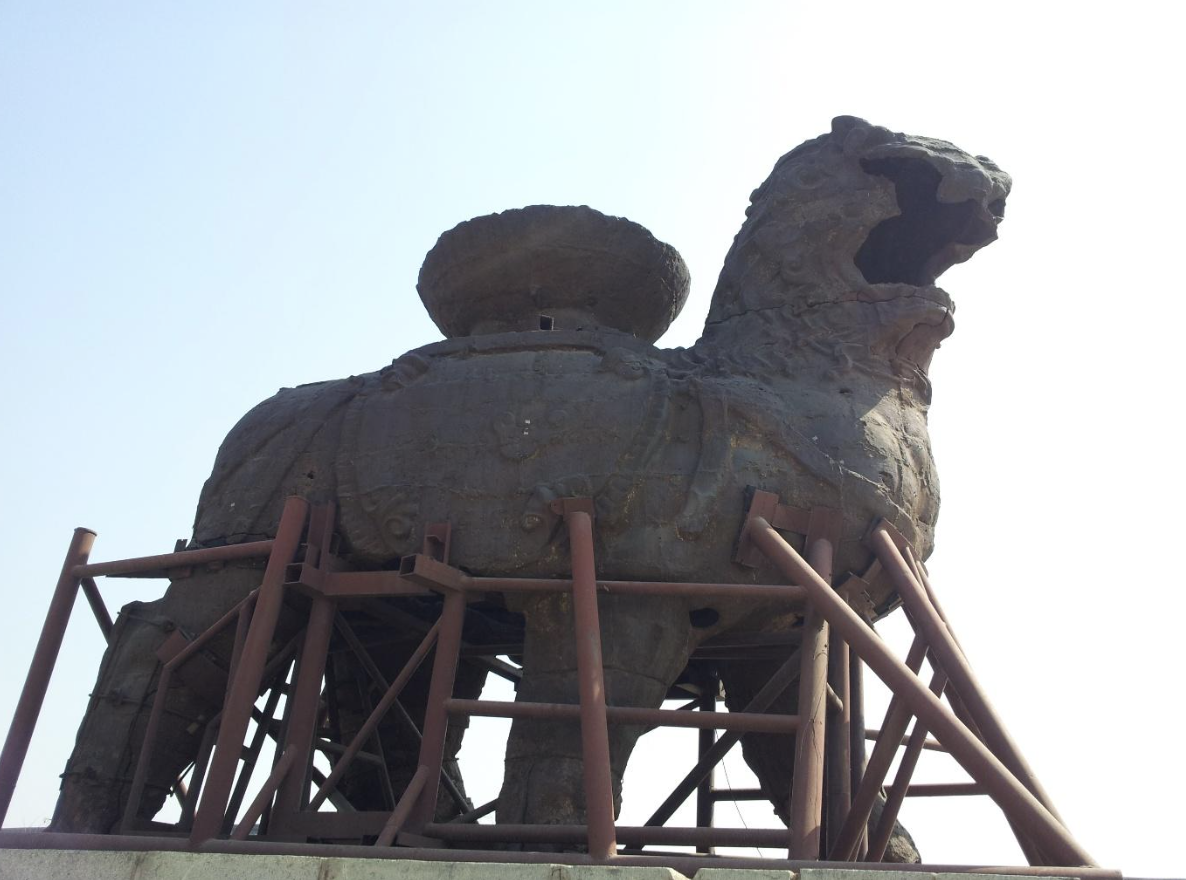
After getting off the bus, we could see it from afar inside its enclosing wall. This is a small museum. After buying tickets and passing through a narrow passage, the Iron Lion came into view, standing tall in the middle of the square. Because of the wind and rain erosion of the past thousand years and improper handling of the cultural relic in modern times, the Iron Lion needs to be supported by a metal frame, but even this cannot conceal its majestic extraordinariness. The Iron Lion is also called “Zhenhai Hou” (鎮海哮, “Roaring Sea Calmer”). According to historical records, it was cast in the third year of the Guangshun era of the Later Zhou (953 CE). Because Cangzhou lies on the coast of the Bohai Sea, seawater often flooded. People in ancient times believed that this “Roaring Sea Calmer” could suppress tsunamis. According to historical records, it originally stood in front of Kaiyuan Temple (開元寺), and a Manjushri Bodhisattva (文殊菩薩) statue sat on top of it. Today the temple and the Bodhisattva are nowhere to be found; only the Iron Lion remains, still watching over this ancient land from its high platform.
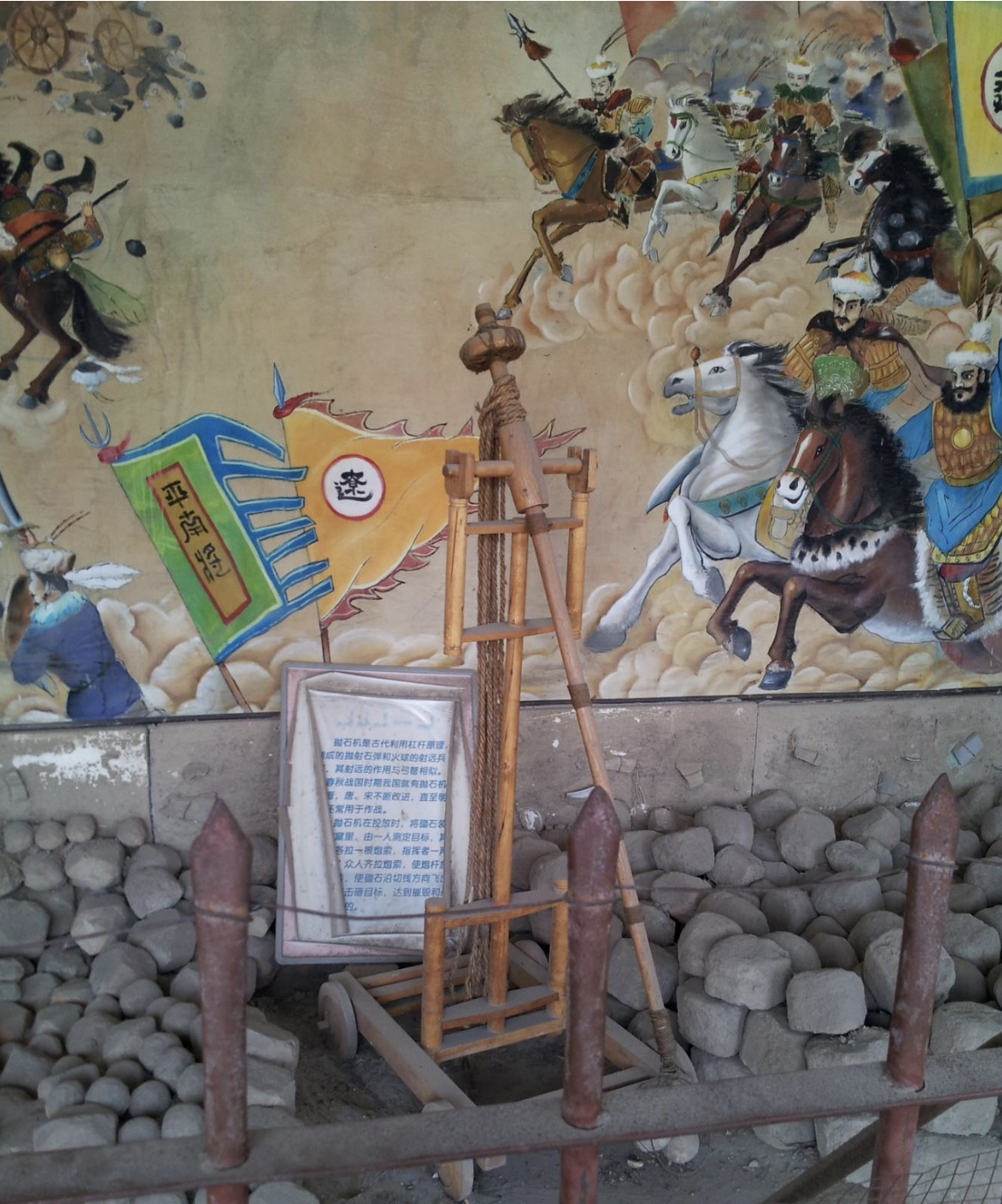
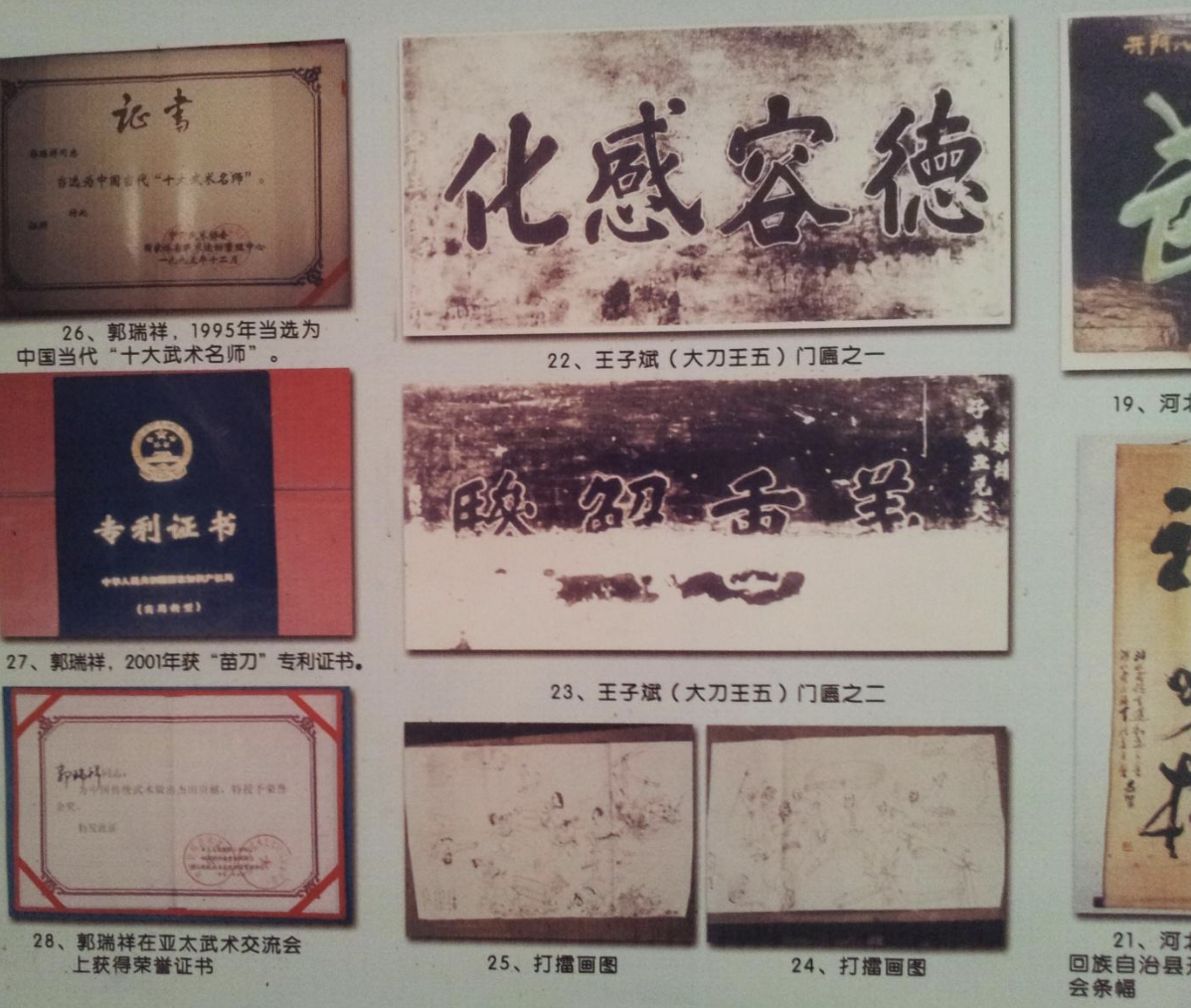
In the museum there is an exhibition hall themed on Cangzhou martial arts. It displays some history and heroic figures related to Cangzhou—such as the famous Sui-Tang general Luo Cheng (羅成) fighting Su Lie (蘇烈) here; the Northern Song heroine Mu Guiying (穆桂英) giving birth to a child before battle; and so on. These are all well-known stories set against the background of Jiuzhou. The hall also introduces the deeds of many modern Cangzhou martial arts figures: Huo Yuanjia (霍元甲) founded the Chin Woo Athletic Association (精武體育會) in Shanghai; Cao Yanhai (曹晏海) won the national martial arts tournament in Hangzhou and was awarded a silver shield by Du Yuesheng (杜月笙) and Huang Jinrong (黃金榮), who praised him as “Martial Champion” (武狀元); and Big Saber Wang Wu (大刀王五) settled a armed clash between Hui and Han at a temple fair and received a plaque reading “Virtue and Tolerance Move and Transform” (德容感化), and so on.
After visiting for a long time, it felt as if we had read a concise history of Cangzhou martial arts development, and we benefited greatly. But in the blink of an eye the sun had already moved west, and it was time for us to leave. Looking back at the Iron Lion that has stood erect for a thousand years, and at the ancient battlefield not far away, I could not help but recall the words of the ancients: “Since ancient times, Yan and Zhao have produced many stalwart men” (自古燕趙多壯士)—truly not false!
騎走滄州之七
四月七日舊州鎮
我們打算明天就離開滄州了.今天要把握好時間,去舊州鎮看一看著名的鐵獅子.它可以說是滄州武術的文化象徵.在2011年市政府於滄州西站不遠處,建了個獅城公園作為旅遊景點.公園裏有隻仿製的鐵獅子方便遊人觀賞.它全身的金屬修整得凹凸有致,而身量要比原本的那隻還高大些.公園內的設施既整齊又美觀.但喜歡歷史文化的朋友,我仍建議他們去舊州一趟.滄州西站到舊州其實也不太遠,大約就那麼三十多公里罷了.據知舊州始建於西漢高帝五年(公元前202年 )原名浮陽,在唐代改名清池,至宋代叫做洪州城,也就是水滸傳裡林冲被發配充軍的地方.它一直是滄州的治所,至明永樂二年(1404年)行政中心才遷至今日的滄州市,洪州便改名為舊州了.
下車後,從遠處就望到它在圍牆之內.這是個小型的博物館.買票後穿過窄小的通道,迎面而來的就是鐵獅子,高聳地豎立在廣場的中間.因為過去千年的風雨侵蝕和近代對文物的不當處理.鐵獅子需用金屬架支撑着,但這也難以遮掩其自身的雄偉不凡.鐵獅子又稱為「鎮海哮」據歷史記載是後周廣順三年(公元953年)鑄造. 因滄州位於渤海之濱,時有海水泛濫.古時人們相信這鎮海吼能震懾海嘯.據歷史的記載,它原本站在開元寺前,上面還坐了位文殊菩薩.時至今日寺廟和菩薩已不知所踪,只剩下鐵獅子,仍在高臺上守望着這片古老的大地.
在博物館裏,有一個以滄州武術為主題的展覽廳.展示着一些與滄州有關的歷史和英雄人物.如隋唐時的名將羅成在此大戰蘇烈;北宋時的巾幗英雄穆桂英於陣前產子等等,都是些以舊州為背景,燴炙人口的故事.館內還介紹了很多近代滄州武術界名人的事跡:如霍元甲在上海開創了精武體育會;曹晏海在杭州全國武術擂台賽取勝,被杜月笙和黃金榮贈予銀盾譽其為武狀元;還有大刀王五在廟會中平息了回、漢兩族之間的械鬥獲「德容感化」的牌匾等等.
參觀良久,彷彿讀了一篇簡明的滄州武術發展史似的,獲益良多.但轉眼間日已偏西,我們也是時候離開了.回望着兀立了千年的鐵獅子,還有不遠處的古戰場,不禁想起古人的話:“自古燕趙多壯士”誠不虛也!
